24V Dc Power Supply Explained: A UK Buyer's Guide
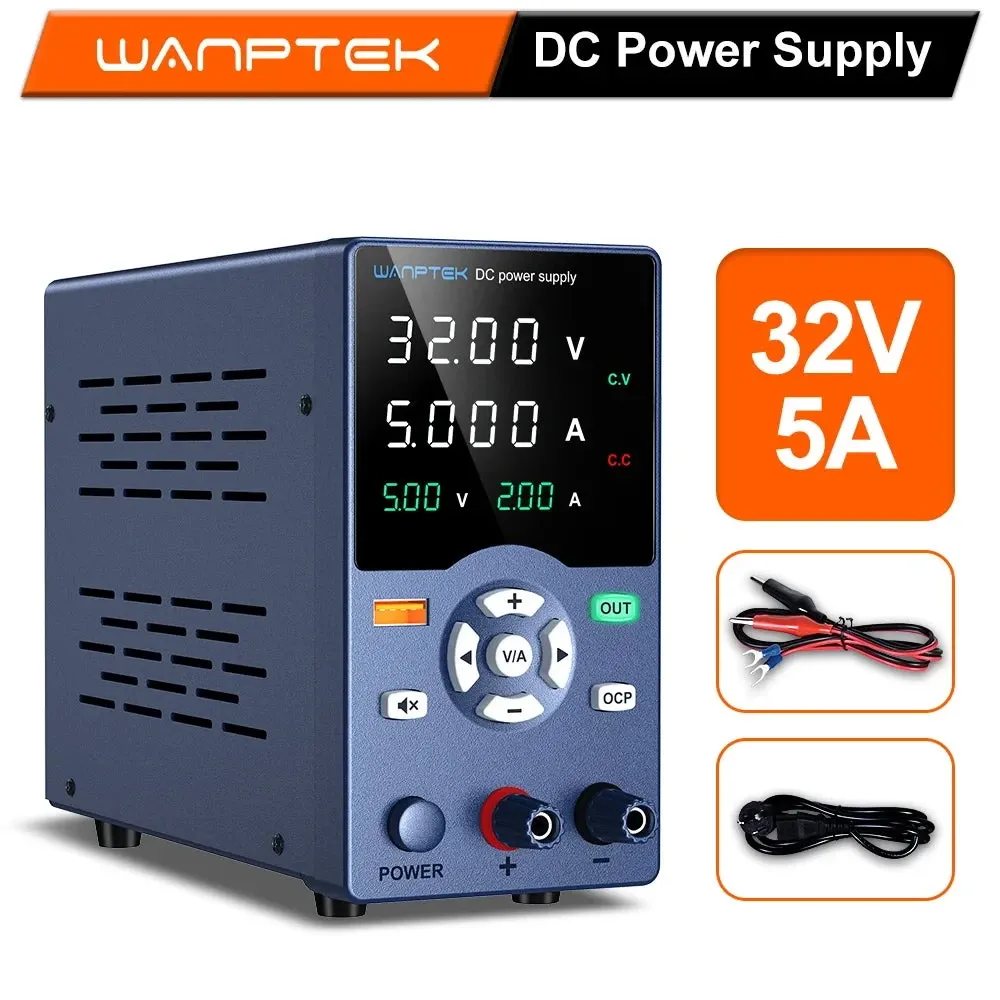
24V DC Power Supply Explained: A UK Buyer’s Guide
A 24V DC power supply is one of the most widely used power solutions in British workshops, service benches, industrial control panels and electronics labs. From powering PLCs and sensors to testing motors, LED systems and communications equipment, 24V has become a practical standard because it balances usable power with relatively low-voltage operation.
For UK buyers, the challenge is rarely finding a 24V DC power supply in principle. The real issue is choosing the right type: fixed or adjustable, enclosed or benchtop, light-duty or high-current, regulated for precision work or simply adequate for basic loads. Get that choice wrong and you can end up with unstable output, overheated components, nuisance shutdowns or wasted spend.
This guide explains what a 24V DC power supply does, where it fits into UK use cases, how to size one correctly and when an adjustable bench unit may be the smarter long-term investment.
Key Takeaways
- A 24V DC power supply converts mains electricity into regulated 24-volt direct current for equipment, test setups and electronic projects.
- In the UK, 24V DC is common in industrial automation, CCTV, access control, laboratory setups and repair work.
- The right unit must be matched for voltage accuracy, current capacity, ripple performance, protection features and intended environment.
- An adjustable benchtop model offers more flexibility than a fixed-output unit when testing a range of devices.
- BenchVolt’s 32V 10A variable DC power supply can be set to 24V while giving headroom for other applications, with a 4-digit LED display and built-in USB fast-charging.
What is a 24V DC power supply?
A 24V DC power supply takes AC mains input and converts it into a steady direct current output at 24 volts. In practical terms, it provides the controlled electrical power needed by equipment designed to run on 24V DC rather than directly from UK mains.
Most modern units use switch-mode conversion because it is compact and efficient. Better-quality supplies also include regulation circuits to keep the output close to the target voltage even when the load changes.
That stability matters. If you are testing electronics, driving automation components or running sensitive devices, poor regulation can lead to erratic behaviour that looks like a fault in the equipment when the real issue is the power source itself.
Why 24V is so common
Twenty-four volts is widely adopted because it suits many control and instrumentation systems while remaining far below mains voltage. It is especially common in industrial environments where sensors, relays, actuators and controllers are designed around that standard.
According to the Health and Safety Executive, electricity remains a serious workplace hazard in Great Britain, with electrical systems requiring proper design, maintenance and safe working practices under the Electricity at Work Regulations 1989. Low-voltage control systems such as 24V DC are often used as part of safer system design where appropriate, though they still require correct installation and protection. Source: HSE guidance on electrical safety.
Where a 24V DC power supply is used in the UK
The most suitable type of 24V DC power supply depends on what you need to run. In Britain, typical applications span trade use, engineering environments and specialist servicing work.
Industrial automation and control panels
Factories and process sites across the UK commonly use 24V rails for PLCs, HMIs, sensor arrays and control circuitry. In these settings, reliability is more important than headline specs alone. Buyers usually look for steady output under continuous load, DIN-rail compatibility where needed and protection against overload or short circuit conditions.
Workshop testing and repair benches
If you diagnose faults or commission equipment on the bench, an adjustable unit often makes more sense than buying several fixed-voltage supplies. A variable bench model can be dialled to exactly 24V when required but also supports lower or higher voltages for wider project coverage.
CCTV, security and access control
Some camera systems, door controllers and access hardware use 24V DC inputs. For installers or maintenance teams working across mixed estates such as offices, schools or healthcare settings including NHS-related facilities managed by contractors, dependable regulated output helps avoid intermittent faults that are difficult to trace on-site.
Laboratories and education
Training centres, college engineering departments and technical labs often need controlled low-voltage sources for demonstrations and experiments. Clear digital readouts are particularly useful here because students and technicians can verify settings quickly without external meters for every adjustment.
Fixed-output vs adjustable bench supplies
This is one of the most important buying decisions. A fixed-output model delivers only one nominal voltage. An adjustable bench unit allows you to set output voltage manually up to its maximum rating.
When a fixed 24V DC power supply makes sense
- You need permanent installation in one system only.
- Your load always requires around 24V DC.
- You want a compact enclosed or DIN-rail format.
- You do not need front-panel controls or frequent adjustments.
When an adjustable benchtop model is better
- You test multiple devices at different voltages.
- You want current limiting for safer diagnostics.
- You need clear live readings of voltage and current draw.
- You value one versatile tool instead of several single-purpose units.
This is where BenchVolt fits naturally into the discussion. Its core proposition as “The Ultimate Adjustable Benchtop Power Supply” suits users who may need a reliable 24V setting today but also want room for broader bench work tomorrow. A 32V 10A variable DC power supply gives practical flexibility without forcing you to buy separate units as your projects expand.
If you are comparing different bench categories more broadly, our guide to a lab power supply explains what separates entry-level options from more capable workshop models.
How to choose the right 24V DC power supply
1. Start with current requirement
Voltage gets most of the attention but current capacity usually determines whether a unit will perform properly. Check the rated current draw of your device or add together all loads if powering several components from one source.
A sensible rule is to allow headroom above normal operating current rather than running continuously at the limit. For example:
- A device drawing 2A should ideally have at least a little spare capacity beyond that figure.
- A system drawing peaks of 6A should not be paired with a marginally rated supply if those peaks are frequent or sustained.
- If startup current is higher than running current, size for that surge rather than steady-state figures alone.
2. Check regulation accuracy
A decent regulated output stays close to its set value as mains input or load conditions vary. This matters far more in test environments than many buyers realise. Unstable voltage can mask faults or create new ones during troubleshooting.
< h3>3. Look at ripple and noiseRipple refers to residual AC variation on top of the DC output. Lower ripple is especially important when powering sensitive electronics, communications equipment or instrumentation. For basic loads, it may matter less, but for bench diagnostics it can affect results.
4. Protection features matter
At minimum, a good 24V DC power supply should offer safeguards against:
- Overcurrent
- Short circuit conditions
- Overvoltage issues
- Overtemperature shutdown where applicable
The presence of these protections improves safety for both operator and equipment. On an active test bench this can save expensive components from damage during setup errors or fault-finding work.
5. Consider display quality and control resolution
If you plan to set exactly 24.0V rather than “somewhere around” that figure, display clarity matters. A 4-digit LED display gives much better confidence than vague analogue indicators, especially when checking live voltage/current behaviour under changing load. This aligns well with BenchVolt’s product design, which focuses on precise, controlled delivery rather than rough approximation.
6. Think about build quality, terminals and daily usability< / h3 >
For regular bench use,
small details make a big difference:
solid binding posts,
responsive controls,
clear readouts,
effective cooling
and sturdy casing all affect how reliable
and easy
the unit feels over time.
Cheap supplies often disappoint here long before they fail electrically.
Many buyers start by searching specifically for a
24v dc power supply because that is what their immediate project needs.
That makes sense.
But if your work includes prototyping,
repairing mixed equipment
or learning electronics,
a strictly fixed-output purchase can become limiting quite quickly.< / p >
An adjustable
32V
10A bench unit allows you
to set exactly
24V while still covering lower-voltage circuits,
battery-adjacent testing scenarios
and future requirements.
In practice,
that flexibility often offers better value than buying one fixed
unit now
and another later.< / p >
BenchVolt’s variable desktop model was built around this kind of real-world usage:
precise adjustment,
controlled output,
a clear
4-digit LED display,
and built-in USB fast-charging as an extra convenience on busy benches.
If your workspace regularly includes phones,
test accessories
or USB-powered modules,
that integrated charging option keeps things tidier.< / p >
For readers comparing nearby voltage classes before deciding what suits their setup best,
see our detailed pillar resource:
The Ultimate Guide to
15V Dc Power Supply in the UK<
/a>.
It gives useful context on how different voltages map onto different applications.< / p >
Any mains-powered unit intended for UK use should be suitable for British electrical standards.
Check plug type,
input range
and product documentation carefully.
If integration into commercial premises is planned,
make nstallation follows relevant site procedures
and electrical regulations.< / p >
For products sold in Great Britain,
buyers should review applicable conformity marking requirements such as UKCA where relevant,
alongside technical documentation from reputable sellers.
Trust matters here:
clear specifications,
transparent returns information
and accessible support are all positive buying signals.< / p >
If equipment will be used in maintenance workflows linked to NHS facilities or other regulated estates,
avoid unverified bargain imports with weak documentation.
Procurement teams typically want traceability,
reliable specs
and confidence that replacement support exists if something fails.< / p >
Even low-voltage outputs require sensible practice:
use adequately rated leads,
avoid exposed conductors,
maintain ventilation around fan-cooled units
and never assume “low voltage” means “risk free”.
The HSE’s broader electrical safety guidance remains relevant in workshops as well as formal industrial settings.< / p >
If your interest extends into specialist pedalboard applications rather than general electronics work,
our article on the <
a href="/blog/voodoo-lab-power-supply-explained-a-uk-buyers-guide/">Voodoo Lab Power Supply<
/a > covers very different buying priorities such as isolated outputs and noise-sensitive audio setups.< / p >
A unit labelled
24V tells you almost nothing about regulation quality,
usable current delivery or protection features.< / p >
Motors,
solenoids
and some electronic loads draw more current at startup than during normal operation.< / p >
Sparse specs often hide weak performance data on ripple,
duty cycle
or safety protections.< / p >
If your work changes regularly,
an adjustable bench model may be more economical over time than multiple single-output supplies.< / p >
For diagnostics and repeatability it matters greatly whether you can trust what the front panel shows.< / p >
Readers weighing broader purchasing criteria may also find this companion resource useful:
The Ultimate Guide to
15V Dc Power Supply in the UK<
/a>.
Although focused on another nominal voltage,
it helps explain how form factor,
regulation
and intended application should shape your decision.< / p >
BenchVolt’s main site promise centres on precise ,
controlled power for electronics projects ,
which matches exactly what serious buyers should look for in this category .
A dependable benchtop unit should do more than switch on :
it should help you test ,
verify ,
adjust ,
protect ,
and repeat results confidently .<
/ p >
That combination makes sense for engineers ,
technicians ,
repair specialists ,
students ,
makers ,
and anyone building out a capable electronics bench in the UK .<
/ p >
If you need a reliable <
strong >24v dc power supply< / strong > but do not want your setup limited by fixed-output hardware ,
BenchVolt offers a more flexible approach .
Its <
strong >32V
10A variable DC power supply< / strong > lets you dial in precise ,
controlled output for today’s job while covering tomorrow’s projects too .<
/ p >
View the product details ,
specifications ,
and availability here:
BenchVolt – The Ultimate Adjustable Benchtop Power Supply<
/a>.
If you are still comparing requirements across different voltages ,
our pillar guide remains worth reading:
The Ultimate Guide to
15V Dc Power Supply in the UK<
/a>.<
/ p >
Yes .
If the unit allows accurate adjustment to
24 .
0V and provides enough current for your load ,
it can serve perfectly well as a <
strong >24v dc power supply< / strong > .
This approach is often better for workshops because one unit can cover multiple voltages .<
/ p >
That depends entirely on what you are powering .
Check your device’s rated current draw ,
allow headroom above normal consumption ,
and account for startup surges where relevant .
Never choose solely by voltage without confirming amperage requirements .<
/ p >
>
Yes ,
provided the voltage is correct and stable .
A device will generally draw only the current it needs .
The problem comes from insufficient available current ,
not surplus capacity .
Good protection features still matter .<
/
p >>
>
Look for clear specifications ,
reliable seller support ,
appropriate mains compatibility ,
good display accuracy ,
protection functions ,
solid terminals ,
and trustworthy documentation .
For regular project work ,
an adjustable model with precise controls usually offers better long-term value .<< /
p>>
>
Why adjustable headroom can be smarter than buying only fixed
24V<
/ h2 >
UK-specific considerations before you buy<
/ h2 >
Mains compatibility<
/ h3 >
CE/UKCA marking and supplier credibility<
/ h3 >
Professional environments such as healthcare estates<
/ h3 >
Workspace safety<
/ h3 >
Common mistakes when buying a
24V DC power supply<
/ h2 >
Why BenchVolt suits buyers who need controlled
24V performance<
/ h2 >
Call to action: Explore BenchVolt’s adjustable benchtop solution<
/ h2 >
Frequently Asked Questions<
/ h2 >
Can I use an adjustable bench supply as a
24V DC power supply ?<
/ h3 >
How many amps do I need for a
24V DC power supply ?<
/ h3 >
Is a higher-current PSU safe if my device draws less ?<
/ h3 >>
Ready to bring precision to your workshop with BenchVolt?
Upgrade Your Bench — £149.61