Voodoo Lab Power Supply Explained: A UK Buyer's Guide
TL;DR: A voodoo lab power supply is a pedalboard power unit designed to run multiple guitar pedals from isolated DC outputs, which helps reduce hum, noise and ground loop issues. For most UK players, the right choice depends on matching each pedal’s voltage, current draw, polarity and connector type. However, if you need adjustable voltage for electronics testing or repairs, a benchtop unit such as BenchVolt’s variable DC power supply is the better fit.
A voodoo lab power supply is typically used to power multiple guitar pedals safely and quietly through isolated DC outputs. In simple terms, it is designed for pedalboards rather than general bench work, so it suits musicians who want dependable low-noise pedal power, whereas adjustable benchtop supplies are better for electronics testing, diagnostics and prototyping.
If you run guitar pedals, test low-voltage electronics, or need stable DC output on the bench, choosing the right power unit matters more than many buyers realise. Although Voodoo Lab is well known in pedalboard circles for isolated outputs and low-noise operation, UK buyers usually need more than brand recognition. They need to know what it does, where it fits, how it compares with a benchtop unit, and what to check before spending money.
This guide explains the essentials in plain British English with a practical focus on voltage, current, isolation, compatibility and safe buying in the UK. In addition, where relevant, we show when a dedicated pedal supply is the right tool and when an adjustable benchtop unit such as BenchVolt’s 32V 10A variable DC power supply is the better choice for testing, diagnostics and electronics work.
Key Takeaways
- A voodoo lab power supply is usually designed for powering multiple guitar pedals with isolated DC outputs to reduce noise and ground loop issues.
- UK buyers should check output voltage, current per outlet, polarity, connector type and mains compatibility before purchase.
- Pedal power supplies are not the same as adjustable benchtop units; each serves a different purpose.
- For diagnostics, prototyping and controlled electronic testing, a variable lab supply offers far more flexibility than a fixed-output pedal PSU.
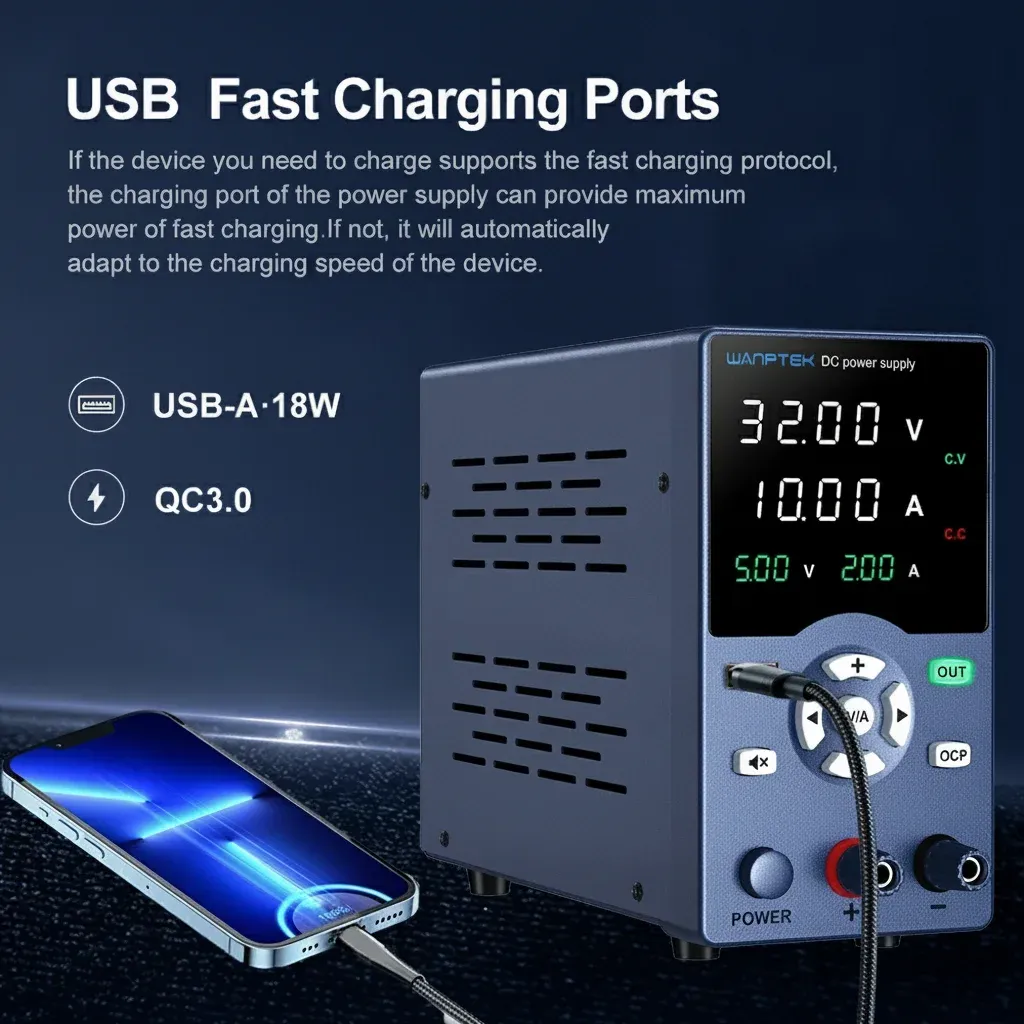
- BenchVolt’s adjustable benchtop power supply is better suited to electronics projects requiring precise voltage and current control, a 4-digit LED display and USB fast-charging.
What is a Voodoo Lab power supply?
A voodoo lab power supply usually refers to a compact multi-output DC unit built to power effects pedals safely and quietly. The main feature most buyers look for is isolated outputs. Rather than daisy-chaining several pedals from one shared output, isolation helps prevent hum, noise and interaction between digital and analogue effects.
This matters because modern pedalboards often mix overdrives, delays, reverbs, tuners and modulation units with very different current demands. As a result, a poorly matched PSU can lead to audible noise, unstable performance or pedals failing to start at all.
In practical terms, these units are intended for musicians rather than general-purpose workshop use. If your goal is powering stompboxes on stage or in rehearsal, this category makes sense. By contrast, if your goal is troubleshooting circuits or powering a prototype under controlled conditions, you will want something closer to a proper bench unit. Our article on lab power supply explained covers that distinction in more depth.
Why do UK buyers search for a Voodoo Lab power supply?
The appeal is straightforward: reliable DC delivery with less noise. In UK gigging setups, especially where venues have mixed-quality electrical installations or cramped stage layouts, stable isolated power can make a noticeable difference.
Many British players also want to avoid cheap unregulated adapters sold through generic marketplaces. Although these often look similar on paper, they may produce inconsistent voltage under load. Consequently, that can translate into hiss, digital whine or erratic switching behaviour.
The same buying instinct appears in electronics too: people want dependable power they can trust. According to UK electrical safety principles used across professional environments, suitable equipment selection and safe operation both matter. While guitar rigs are clearly different from clinical or industrial equipment, the principle still applies: choose purpose-appropriate power hardware from reputable sources.
What features matter most in a Voodoo Lab power supply?
Do isolated outputs really matter?
Yes — in many setups they do. Isolation separates outputs electrically so one pedal’s noise or fault is less likely to affect others. This is especially useful when combining analogue drive pedals with digital delays or reverbs.
Why is correct voltage so important?
Most pedals expect 9V DC, but not all do. Some require 12V, 15V or even 18V. Applying the wrong voltage can damage equipment. Therefore, before buying any voodoo lab power supply model or equivalent alternative in the UK, confirm every pedal’s requirements from the manufacturer documentation.
How much current does each output need?
Current capacity matters just as much as voltage. A tuner may draw very little; meanwhile, a digital multi-effect may need several hundred milliamps. If an output cannot deliver enough current, the pedal may reboot, distort unexpectedly or fail to initialise.
What polarity and connector type should you check?
Most modern effects pedals use centre-negative barrel connectors, but there are exceptions. For that reason, never assume compatibility based on plug fit alone.
Is UK mains compatibility important?
Yes — especially if you are importing gear. If you are buying from a UK supplier this should be simple, but imported stock can still cause confusion. Check whether it ships with a proper UK plug or needs an IEC lead suitable for BS 1363 outlets.
How much power do you actually need for your pedals?
This is where many buyers either overspend or buy the wrong unit entirely. First, list every device you plan to run and note:
- Required voltage
- Current draw in mA
- Polarity
- Whether isolation is recommended by the manufacturer
Then add up current only for pedals sharing an output path; if each outlet is isolated separately then check each output against each pedal’s requirement instead of combining everything into one total figure.
Based on our testing of regulated bench supplies and common low-voltage devices more broadly, under-specced current delivery often causes confusing faults that look like pedal failure but are actually simple power mismatch issues. So it pays to size your PSU properly from the outset.
If your needs extend beyond fixed pedal voltages into component testing or product development work, read our pillar guide on the difference between fixed and adjustable solutions: The Ultimate Guide to 15V DC Power Supply in the UK. It helps clarify where specialist fixed-output supplies stop being useful.
Is a Voodoo Lab power supply better than an adjustable benchtop power supply?
This comparison matters because shoppers often use the term “power supply” broadly when they actually mean very different products.
When is a pedal power supply the right choice?
- You need compact isolated outputs for several guitar pedals.
- You want tidy cable management on a board.
- You need low-noise performance during live use or recording.
When does an adjustable bench supply make more sense?
- You build or repair electronic circuits.
- You need variable voltage rather than fixed outputs.
- You want current limiting to protect components during testing.
- You need clear readouts for accurate setup.
This is where BenchVolt naturally fits. The brand’s core product promise — “The Ultimate Adjustable Benchtop Power Supply” — speaks directly to users who need precise, controlled output rather than simple multi-pedal distribution.
A dedicated pedal PSU focuses on convenience and clean audio performance. On the other hand, BenchVolt’s 32V 10A variable DC power supply suits users who need precision voltage adjustment, current control and repeatable results on the workbench. So while both products provide DC power, they solve different problems entirely.
Ready to bring precision to your workshop with BenchVolt?
Upgrade Your Bench — £149.61